Quick Answer
If your AC evaporator coil is frozen in Lakeland, FL: turn the system OFF immediately (or switch to fan-only), do not chip the ice, and let it thaw for 2–4 hours. Check your air filter first, a severely clogged filter is the most common cause and may be the only fix needed. If the coil refreezes after a filter change and thaw cycle, you have a refrigerant problem that requires a licensed technician. Call Top Notch Air Conditioning & Heating at (863) 875-5500.
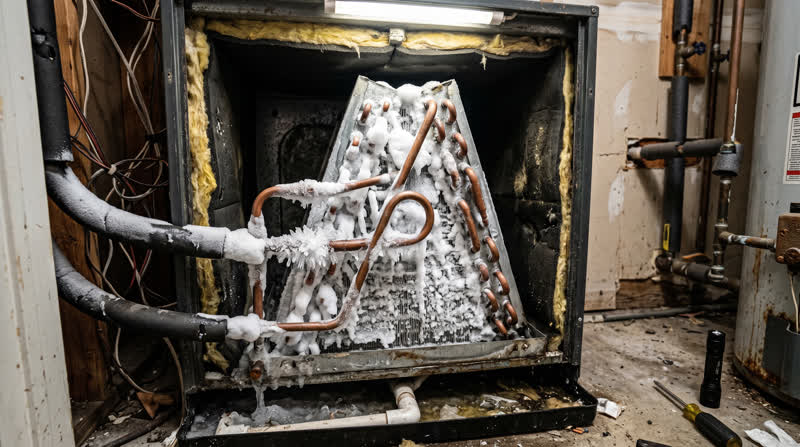
Finding a solid block of ice on your indoor AC unit, on the copper refrigerant lines, on the evaporator coil itself, or around the air handler cabinet, is alarming. It seems counterintuitive that in Lakeland's sweltering July heat, your AC can develop ice. But it happens, and when it does, the system stops cooling almost entirely because the block of ice prevents air from passing through the coil normally.
Understanding why this happens helps you respond correctly and prevent it from happening again.
Why AC Coils Freeze in Lakeland's Heat
The evaporator coil inside your air handler operates at extremely low temperatures, typically 35–45°F, in order to cool the air passing over it. Normally, this is fine because warm air continuously flows over the coil, keeping it from reaching 32°F. But when certain conditions are met, the coil temperature drops below freezing, and the moisture condensing on it turns to ice rather than draining away.
There are two primary triggers for this process:
- Severely restricted airflow: When air cannot flow through the system normally, usually because of a clogged filter, blocked return vents, or a failing blower motor, the coil does not receive enough warm air to stay above freezing. The refrigerant inside gets colder and colder until the coil temperature drops below 32°F and ice forms.
- Low refrigerant: When refrigerant levels drop due to a leak, the remaining refrigerant expands more than designed inside the coil, dropping to temperatures well below freezing. This is a thermodynamics issue that cannot be fixed by any homeowner action, it requires a licensed technician to find the leak, repair it, and recharge the system.
Emergency Steps When You Find a Frozen Coil
Time matters here, the longer you run a frozen system, the more likely you are to cause compressor damage from liquid refrigerant returning to the compressor (a condition called liquid slugging). Follow these steps immediately:
- Step 1: Turn the system completely OFF at the thermostat, not just temperature up, but switch the mode to OFF or switch to FAN ONLY mode. Fan-only mode runs the blower without the compressor, which helps the coil thaw faster by circulating warm air over it.
- Step 2: Do NOT chip, scrape, or pour water on the ice. Let it thaw naturally. Forcing rapid defrost can damage the delicate aluminum fins on the coil.
- Step 3: Check the air filter. Pull it out and look at it, if it is packed solid with dirt and you cannot see light through it, replace it immediately. This is the cause in a significant percentage of freezing events, and a filter change may resolve the problem entirely.
- Step 4: While the system thaws, check that all return air vents are open and unobstructed. Furniture pushed against return vents, closed room doors, or blocked floor registers all restrict airflow.
- Step 5: Wait 2–4 hours for complete thaw. The water from melting ice should drain through the condensate drain. Watch the drain pan to make sure it is draining properly.
- Step 6: Once the coil is fully thawed, replace the filter (if not already done) and restart the system. Monitor the next 30 minutes, if ice begins to form again, turn the system off and call for service.
Causes of Frozen Evaporator Coils in Lakeland Homes
Clogged Air Filter
This is the most common cause in Lakeland, and also the most preventable. Lakeland's combination of outdoor pollen (especially from the extensive oak tree canopy in neighborhoods like Dixieland, Lake Hollingsworth, and around Lake Morton), pet dander, and household dust means filters can clog in as little as 3–4 weeks during high-pollen periods. Most Lakeland homes should check their filter monthly and replace it every 1–3 months depending on filter type and household conditions.
Low Refrigerant
The second most common cause. A slow refrigerant leak develops over months or years, pinhole leaks in coils from formicary corrosion are common in Lakeland due to the combination of copper pipe and certain volatile organic compounds in the home's air. As the leak continues, the system loses refrigerant gradually until the low charge causes the coil to run below freezing. Repair requires finding and fixing the leak, then recharging the system. Call (863) 875-5500 for a free quote on refrigerant leak repair.
Dirty Evaporator Coil
Even with a clean filter, evaporator coils accumulate a thin film of dust over time that reduces airflow through the coil fins. In Lakeland's humid environment, this dust film can also support biological growth that makes the problem worse. Annual professional cleaning during a tune-up is the standard of care for Lakeland systems.
Failing Blower Motor
The blower motor inside the air handler drives the airflow over the evaporator coil. As the motor ages and capacitor degrades, it may run at reduced speed, not enough to fail completely, but delivering insufficient airflow to keep the coil from freezing. A technician can measure actual airflow against designed specifications to identify this issue.
Closed or Blocked Vents
A common misconception among Lakeland homeowners: closing supply vents in unused rooms saves money by directing air to occupied areas. In reality, closing vents increases duct system pressure and can reduce airflow enough to contribute to coil freezing. Keep all supply vents open, even in rooms you are not using regularly.
| Cause | Homeowner Fix? |
|---|---|
| Clogged air filter | Yes, replace filter ($5–$25 at any hardware store) |
| Blocked return vents | Yes, clear obstructions (free) |
| Low refrigerant | No, licensed tech required. Call for quote |
| Dirty evaporator coil | No, professional cleaning. Call for quote |
| Failing blower motor | No, motor replacement. Call for quote |
| Closed supply vents | Yes, open vents (free) |
Why Are Frozen Coils Particularly Common in Lakeland?
Lakeland's high humidity is actually a contributing factor in evaporator coil freezing. When the coil surface reaches freezing temperature, there is abundant moisture in the air to condense and freeze on it, Lakeland's 75%+ average relative humidity means the freezing process, once started, progresses rapidly. A Lakeland AC system with a clogged filter can freeze solid in just a few hours of operation, whereas the same system in a drier climate might take longer to reach the same state.
Lakeland's older home stock also contributes. Homes in neighborhoods like Dixieland, Cleveland Heights, and around Crystal Lake often have air handlers in tight utility closets where airflow is already somewhat restricted. When a filter clogs in one of these closets, the already-marginal airflow drops to a level that causes rapid coil freeze.
Preventing Future Freeze-Ups
The most effective prevention strategies for Lakeland homeowners:
- Check and replace your air filter monthly during the peak April–September pollen and AC season
- Schedule professional annual tune-ups that include evaporator coil inspection and cleaning
- Keep all supply and return vents open and unobstructed
- Have refrigerant levels checked annually, a small leak caught early costs far less than an emergency call after a coil freeze
- Yeti Club membership includes one tune-up per year that specifically address the conditions that cause coil freezing
Frequently Asked Questions
How long does it take for a frozen AC coil to thaw in Lakeland?
In fan-only mode (blower running, compressor off), a heavily frozen coil typically thaws in 1–2 hours. In off mode (nothing running), thaw takes 2–4 hours. The warmer the indoor temperature, the faster the thaw. Once you can no longer see ice or frost on the refrigerant lines and coil area, the thaw is complete and you can restart normally.
Can running a frozen AC damage the compressor?
Yes. When the evaporator coil is frozen solid, the refrigerant inside is extremely cold, colder than designed. If liquid refrigerant returns to the compressor (called liquid slugging), it can cause severe mechanical damage because compressors are designed to compress gas, not liquid. This is why turning the system off when you see ice is critical. Short periods of frozen operation rarely cause immediate damage, but sustained frozen operation significantly shortens compressor life.
My AC filter looks dirty but not terrible, can that still cause freezing?
Yes. In Lakeland's high-humidity environment, even a moderately loaded filter can restrict airflow enough to contribute to coil freeze, especially if there are other minor restrictions in the system like slightly dirty coils or partially blocked vents. When in doubt, replace the filter. A new filter costs $5–$25 and takes two minutes; a frozen coil situation is a much larger problem.
Call for Service After a Freeze Event
After you have thawed the coil and replaced the filter, if the system refreezes, or if you are not sure the filter was the cause, call for a diagnostic. A technician can check refrigerant pressures, measure airflow, inspect the coil, and identify what is causing the freeze so it does not happen again mid-summer when you need your AC most.
Top Notch Air Conditioning & Heating serves all of Lakeland, FL including Dixieland, South Lakeland, Lake Hollingsworth, Crystal Lake, Grasslands, Cleveland Heights, Kathleen, and Medulla. Call (863) 875-5500 or schedule a diagnostic online.