Quick Answer
Lakeland, FL AC systems require twice-yearly professional maintenance because they run 10–12 months per year in extreme heat and humidity. Skipping maintenance leads to clogged drain lines causing water damage, failed capacitors causing summer breakdowns, dirty coils causing refrigerant problems, and shortened system lifespan. Top Notch Air Conditioning & Heating's Yeti Club provides two professional tune-ups per year for $199/year, call (863) 875-5500 to enroll.
If you live in Chicago, Minneapolis, or Denver, annual AC maintenance is good practice. If you live in Lakeland, FL, it is non-negotiable.
Lakeland is Polk County's largest city, situated in the heart of central Florida where the combination of subtropical heat, lake-effect humidity from Lake Hollingsworth, Lake Morton, and Crystal Lake, and a near-year-round cooling season creates one of the most demanding environments for residential air conditioning equipment in the country. A Lakeland AC system that runs from March through November, which is typical, logs more operating hours in 5 years than a northern system does in 10.
This guide explains exactly what happens during a professional AC maintenance visit, which specific problems it prevents in Lakeland's climate, and why the math strongly favors preventive maintenance over the "fix it when it breaks" approach.
What a Professional AC Tune-Up Actually Includes
The term "tune-up" is used loosely in the HVAC industry. Some companies offer bargain "tune-ups" that amount to a filter change and a look at the outdoor unit. A genuine professional maintenance visit for a Lakeland home should include all of the following:
- Electrical component testing: Capacitors tested with a multimeter and compared against rated values; contactor contacts inspected for pitting and arc damage; wiring inspected for corrosion and proper connections.
- Refrigerant pressure measurement: Gauges connected to verify system pressures are within manufacturer specifications, indicating correct refrigerant charge and compressor function.
- Condensate drain clearing and treatment: Drain line flushed with pressurized nitrogen or water, algaecide tablets placed in the drain pan to prevent future algae growth.
- Evaporator coil inspection: Coil inspected for cleanliness, frost patterns indicating refrigerant issues, and signs of corrosion. Cleaning if needed.
- Condenser coil inspection and cleaning: Outdoor coil inspected and cleaned if dirt or biological growth is reducing heat transfer.
- Blower motor and belt inspection: Blower motor amperage tested; belt condition checked if applicable.
- Thermostat calibration verification: Thermostat temperature reading compared against actual room temperature.
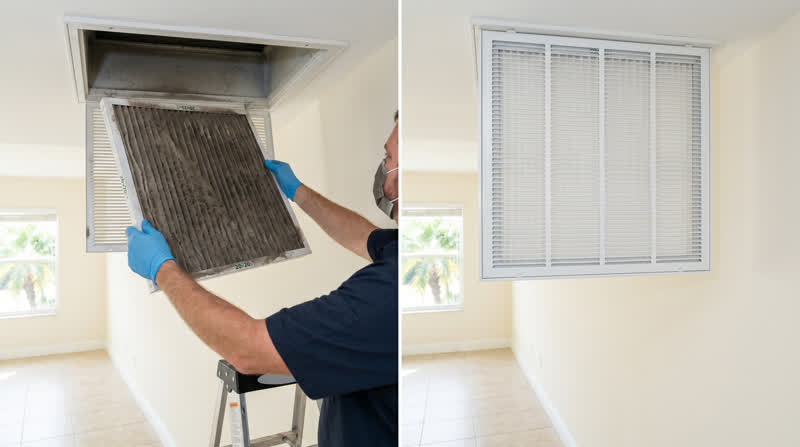
- Air filter check: Filter inspected and replaced if needed (often the homeowner's responsibility between visits).
- Temperature differential measurement: Supply air temperature compared against return air temperature to verify the system is achieving the proper 15–20°F cooling differential.
- System documentation: Service report provided to homeowner documenting findings, any proactive recommendations, and system condition.
The 5 Most Expensive Problems That Maintenance Prevents in Lakeland
1. Clogged Condensate Drain, The Most Common Repair Call
Lakeland's humidity is the primary driver of this problem. Your AC removes 20–50 gallons of moisture per day from the air in a typical Lakeland home during summer. All that water drains through the condensate drain line, and in Florida's warm, moist conditions, algae grows aggressively inside those lines. Without regular treatment, a drain line can clog completely within 2–4 months.
When the drain clogs, the safety float switch shuts down the system, which is inconvenient but better than the alternative: a failed float switch allows the drain pan to overflow, running water into ceilings, walls, and flooring. In Lakeland's older homes in Dixieland, Cleveland Heights, and around Lake Morton, this water damage can be devastating to original hardwood floors and plaster ceilings, far exceeding any maintenance cost.
During a professional tune-up, the drain line is flushed and algaecide is applied. This takes 15 minutes and prevents one of the most common and expensive AC-related home damage events in Lakeland.
2. Capacitor Failure, Lakeland's #1 Summer Breakdown
Capacitors degrade gradually before failing completely. A capacitor rated at 45 microfarads may measure 40 MFD this spring and 35 MFD by midsummer, still technically functional but heading toward failure. Professional maintenance includes measuring actual capacitor values. When a capacitor reads 20% or more below spec, proactive replacement during the scheduled maintenance visit costs the same as a same-day repair call, but happens on a Tuesday afternoon in May rather than in a 95°F crisis on a Saturday in July.
Unplanned same-day service during peak season may leave your family without cooling for hours or a day while you wait for an available technician. Call (863) 875-5500 for repair pricing.
3. Refrigerant Leaks, Gradual Deterioration That Becomes Expensive
Slow refrigerant leaks develop gradually over months and years. Formicary corrosion, a form of chemical attack on copper coils common in Lakeland due to the combination of moisture and certain household chemical vapors, creates pinhole leaks that cause the system to lose refrigerant slowly. During a professional tune-up, refrigerant pressures are measured and compared against manufacturer specifications.
Catching a system that is 5–10% low on refrigerant during spring maintenance allows for a leak search and repair at a controlled time. Waiting until the system is critically low means it will fail during peak summer demand, potentially damaging the compressor from operating at elevated temperatures on low refrigerant.
4. Dirty Condenser Coils, Silent Efficiency Killer
Lakeland's outdoor environment, oak pollen in spring, cottonwood fluff in early summer, dust and grass clippings year-round, coats the outdoor condenser coil fins with a layer of insulating debris. This coating reduces the coil's ability to shed heat from the refrigerant into the outdoor air, raising the system's operating pressure and temperature.
A condenser coil that is 20% fouled operates at head pressures 10–15% above design, consuming more electricity and stressing the compressor. Annual condenser cleaning maintains design-level efficiency and protects the compressor from sustained high-pressure operation. The condenser coil cleaning component of a professional tune-up is one of the highest-ROI activities in residential HVAC maintenance.
5. Early Contactor Detection, Before It Strands You
The contactor is an electrical relay in the outdoor unit that closes to send power to the compressor and condenser fan. Over years of operation, the contactor contacts develop pitting and carbon deposits from arcing, particularly in Lakeland where the contactor opens and closes thousands of times per year. A pitted contactor may still work, but it delivers inconsistent power, causes hard-starting, and can fail completely without warning.
During maintenance, contactor condition is visually inspected. A contactor showing significant wear can be replaced proactively and prevents a system failure that might happen at the worst possible time.
How Often Should Lakeland Homeowners Service Their AC?
For most U.S. locations, once-a-year AC maintenance is the standard recommendation. Lakeland is different. With 10–12 months of significant AC operation per year, twice-yearly maintenance, once in spring (March–April) before peak demand, and once in fall (October–November) after peak demand, is the appropriate standard for Lakeland homes.
- Spring maintenance (March–April): Prepares the system for peak summer demand. Catches components that degraded over the previous summer and fall, clears drain lines, and verifies refrigerant and electrical readiness for another Florida summer.
- Fall maintenance (October–November): Inspects the system after the most demanding period of the year. Addresses any wear that occurred during the June–September peak and prepares the heating system for the brief Lakeland heating season.
The Lakeland Housing Stock Factor
Maintenance frequency and scope should be calibrated to the home's age and condition. Lakeland's diverse housing stock, from 1920s bungalows in Dixieland to 2020s new construction near South Lakeland and Kathleen, creates different maintenance priorities:
- Homes built before 1980 (common in Dixieland, Cleveland Heights, Crystal Lake): More frequent drain line attention due to older PVC that may have partial scale buildup. Duct inspection for leakage that increases system load.
- Homes built 1980–2000: Systems from this era are at or past typical lifespan. Maintenance focus shifts toward comprehensive documentation of component condition to support repair-versus-replace decisions.
- Homes built 2000–2015: Systems approaching the 10–15 year range where capacitors, contactors, and coils need monitoring. Spring maintenance is particularly important to catch components trending toward failure before summer.
- New construction in South Lakeland and Kathleen: Tight building envelopes mean humidity management is critical. Drain line treatment is essential in these homes, and filter changes may need to be more frequent as the new construction dust settles in the first year or two.
The Manufacturer Warranty Requirement
Most major AC manufacturers, including Carrier, which Top Notch Air Conditioning & Heating is a Factory Authorized Dealer for, require regular professional maintenance as a condition of warranty coverage. If a major component fails on a system that has not been professionally serviced, the manufacturer may deny warranty claims on the grounds that the failure resulted from lack of maintenance. This makes professional maintenance not just good practice but a warranty protection measure.
The Return on Investment for Lakeland Homeowners
Consider the math for a typical Lakeland home:
- Yeti Club annual cost: $199/year
- One prevented unplanned repair per year can pay for the plan cost alone
- Extended system lifespan from proper maintenance: 2–5 additional years of deferred replacement costs
- Efficiency improvement from clean coils and proper refrigerant charge: estimated 10–15% electricity savings year-round
By any measure, preventive maintenance in Lakeland's demanding climate returns far more than it costs.
Frequently Asked Questions
When is the best time to schedule AC maintenance in Lakeland?
March or April for spring maintenance, before the full heat of summer arrives and while scheduling is easier. October or November for fall maintenance, after the peak season stress and before the brief Lakeland heating season. Avoid scheduling maintenance in June–August when technicians are at maximum capacity and scheduling windows are longest. Yeti Club members receive priority scheduling regardless of season.
Can I do my own AC maintenance in Lakeland?
Homeowners can and should change filters monthly during peak season, keep the area around the outdoor unit clear, pour diluted bleach into the condensate drain line monthly, and visually inspect the system for obvious issues. But refrigerant pressure measurement, electrical testing, coil cleaning with chemical agents, and capacitor testing require proper equipment and licensing. Both owner maintenance and professional service are appropriate, they address different things.
My Lakeland AC seems to be working fine, do I still need maintenance?
Yes. Many of the conditions that lead to expensive failures, a capacitor reading 30% below spec, refrigerant 10% low, partial drain line clog, produce no perceptible symptoms until they fail. The system "working fine" at the thermostat does not mean it is operating efficiently or that components are not quietly deteriorating. Maintenance finds these issues before they become failures, not after.
Does the Yeti Club cover repairs or just tune-ups?
The Yeti Club at $199/year includes two professional tune-ups, priority scheduling, and member discounts on any repairs needed. It is not a repair warranty, separate repair costs apply when something needs fixing. However, the combination of proactive maintenance (catching issues before failure) and member discounts on repairs makes the overall cost of HVAC ownership significantly lower for Yeti Club members.
Schedule Your Lakeland AC Maintenance Today
Top Notch Air Conditioning & Heating has been serving Lakeland, FL homeowners since 2012, from our base in Winter Haven. We understand the specific demands that Lakeland's climate places on AC equipment, and our Yeti Club maintenance program is designed specifically to address those demands. Whether your home is a 1950s ranch in Dixieland, a lakefront property near Lake Hollingsworth, or a newer build in South Lakeland or Kathleen, your AC deserves professional maintenance from a team that knows Lakeland's climate.
Call (863) 875-5500 to schedule a tune-up or enroll in the Yeti Club, or book online. For Lakeland AC service from a 4.9-star, 615+ Google review team with a verified Florida license (CAC1817537), we are here.