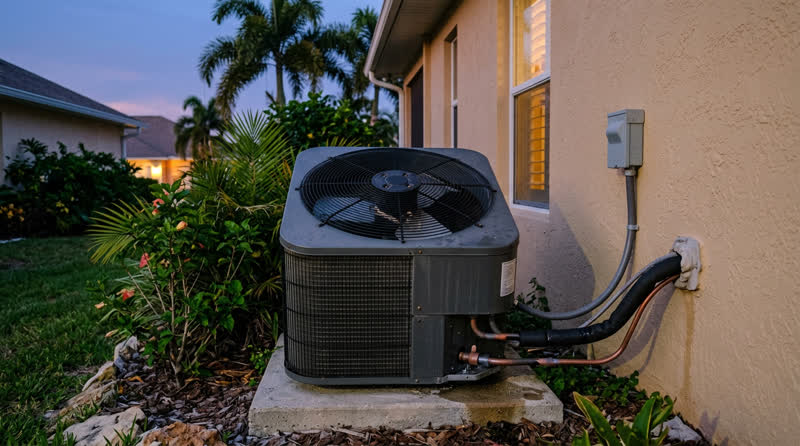
Quick Answer
Heat pump short cycling in Winter Haven, FL, where the unit turns on, runs for only a minute or two, shuts off, and immediately restarts, is almost always caused by one of eight problems: an oversized unit, refrigerant charge issues, a dirty air filter, a frozen outdoor coil, a faulty thermostat, a bad defrost board, a tripping low-pressure switch, or a failing compressor or capacitor. Most of these are repairable for $150–$800. Call (863) 875-5500 to reach Top Notch Air Conditioning & Heating in Winter Haven, we diagnose heat pump short cycling the same day in most cases.
Winter Haven is a city built around water. From the chain of lakes connecting Lake Howard and Lake Hartridge in the downtown core, to the lakefront neighborhoods of Lake Eloise and Cypress Gardens to the south, the air in this city is almost always heavy with moisture. That humidity, combined with the relatively mild but unpredictable Florida winters that force heat pumps to work in ways homeowners rarely anticipate, creates a perfect environment for a frustrating problem: heat pump short cycling in heating mode.
If your heat pump turns on, runs for a minute or two, clicks off, then starts again within a few minutes, you are watching your system short cycle. Left uncorrected, short cycling causes premature compressor wear, dramatically higher electricity bills, and a home that never quite reaches the thermostat setpoint. This guide covers every major cause, what you can check yourself, what repairs cost in Winter Haven, and when to call a professional.
Why Heat Pump Short Cycling Matters in Winter Haven
Central Florida winters are deceptively demanding on heat pumps. Temperatures in Winter Haven regularly dip into the low 40s and upper 30s from December through February, cold enough to stress a heat pump's heating cycle, but not cold enough that most homeowners think of it as a serious cold-weather situation. In neighborhoods like Lake Eloise, Lake Howard, and Lake Hartridge, the adjacent water bodies keep overnight temperatures a few degrees cooler than inland areas, meaning heat pumps run longer and harder on those cold nights.
Short cycling is not just annoying. Every time a compressor starts, it draws a surge of electrical current, often six to eight times the normal running amperage, and generates mechanical stress as internal pressures equalize. A system that runs a normal cycle might start once every 15–20 minutes. A short-cycling system might start 10–15 times per hour. That is the difference between your compressor starting roughly 30 times a day versus 150 times a day. Compressor lifespan is measured in run hours and start cycles, and excessive starts are one of the fastest ways to destroy a compressor.
On the utility bill side, a short-cycling heat pump never reaches steady-state efficiency. Every start cycle consumes high startup power without delivering a proportionate amount of heating. Homeowners in Winter Haven dealing with short cycling often see winter electric bills jump $40–$100 per month above normal before they identify the cause.
What "Short Cycling" Actually Means, and Why Heating Mode Is Different
Short cycling simply means the heating or cooling cycle ends too soon before the home reaches the set temperature. In cooling mode, short cycling is common and well-known, usually caused by an oversized unit or refrigerant issues. In heating mode, the causes overlap but the physics are different in important ways.
When a heat pump runs in heating mode, it reverses the refrigerant flow compared to cooling mode. The outdoor coil becomes the evaporator (absorbing heat from cold outdoor air) and the indoor coil becomes the condenser (releasing that heat into your home). This means the outdoor coil operates at sub-ambient temperatures and is prone to frosting and icing, a completely normal phenomenon that the system manages with periodic defrost cycles. The indoor coil, running hot, is subject to high-limit switches that trip if airflow is restricted.
The key difference from cooling-mode short cycling: heating-mode short cycling is often triggered by safety limit switches protecting the system from excessive pressures or temperatures, by the defrost system malfunctioning, or by outdoor coil icing that blocks refrigerant flow. Understanding this distinction helps explain why the same dirty filter that merely reduces efficiency in summer can cause outright short cycling in winter.
8 Most Common Causes of Heat Pump Short Cycling in Heating Mode
1. Oversized Heat Pump
An oversized heat pump heats the home so quickly that it satisfies the thermostat setpoint before completing a proper run cycle. This sounds like a good problem to have, until you realize the system never reaches steady-state efficiency, humidity control suffers, and the compressor accumulates excessive start cycles. In Winter Haven's newer neighborhoods like Inwood and Eagle Lake, where builders sometimes install oversized equipment to differentiate their product, this is a surprisingly common root cause. The fix is a Manual J load calculation to confirm sizing, and in some cases, replacing the unit with correctly sized equipment or installing a variable-speed system that can modulate output to match the actual load.
2. Refrigerant Charge Problems (Low or Overcharged)
Both low and high refrigerant charge cause short cycling, though through different mechanisms. With low refrigerant, suction pressure drops below the low-pressure switch setpoint, tripping the switch and shutting the system down before a full cycle completes. With an overcharge, discharge pressure climbs too high, tripping the high-pressure switch. Refrigerant issues require a licensed technician, not only because handling refrigerants requires EPA 608 certification, but because a proper charge diagnosis requires measuring both suction and discharge pressure under actual operating conditions. Heating repair in Winter Haven involving refrigerant starts with a full system pressure check to determine the direction and magnitude of the problem before any refrigerant is added or removed.
3. Dirty Air Filter Restricting Airflow
A clogged air filter is the most common homeowner-fixable cause of heat pump short cycling. In heating mode, restricted airflow causes the indoor coil (acting as condenser) to overheat. The high-limit safety switch trips, shuts the system down, resets after a brief cooldown, and the cycle repeats. If you have not changed your filter in the last 60–90 days, pull it out and hold it up to light. If you cannot see through it, replace it immediately with a 1-inch pleated filter rated MERV 8. Do not use ultra-high-MERV filters (MERV 13+) unless your system was specifically designed for them, the increased resistance can restrict airflow nearly as badly as a dirty standard filter.
4. Frozen Outdoor Coil / Iced-Up Reversing Valve
In Winter Haven's winter temperatures, the outdoor coil accumulates frost during normal operation. Heat pumps manage this with automatic defrost cycles, typically running every 30–90 minutes and lasting 5–10 minutes. If the defrost system is not functioning properly, ice accumulates on the outdoor coil until it blocks airflow entirely. At that point, suction pressure collapses, the low-pressure switch trips, and the system short cycles. If you look outside during a cold spell and see your outdoor unit encased in ice beyond a light frost, especially if it has not cleared after 2–3 hours, do not attempt to chip the ice off. Call (863) 875-5500 for a technician to diagnose the defrost system.
5. Failing Thermostat or Wrong Location
A thermostat mounted near a heat register, in direct sunlight, near a drafty window, or on an exterior wall reads a false temperature and may satisfy the setpoint almost immediately after the system starts, creating what looks like short cycling but is actually a measurement error. Similarly, an aging mechanical thermostat with a deteriorated heat anticipator causes erratic on-off behavior. Replacing an old analog thermostat with a quality digital or programmable model often resolves this category of short cycling at minimal cost. For smart thermostat installations, verify the unit is rated for heat pump use and that the O/B wire is configured correctly for heating mode.
6. Faulty Defrost Board
The defrost control board monitors outdoor coil temperature and time intervals to decide when to initiate and terminate defrost cycles. A failing defrost board may initiate defrost too frequently (causing the system to repeatedly switch into cooling mode for defrost and then restart heating), fail to terminate defrost properly, or misread sensor inputs and trigger false shutdowns. Defrost board replacement is a moderate-complexity repair, the board itself costs $80–$200, but diagnosis requires a technician with the ability to read the board's inputs and outputs under operating conditions. This is not a homeowner DIY repair.
7. Low-Pressure Switch Tripping
The low-pressure switch is a safety device that shuts off the compressor if suction-side refrigerant pressure drops below a minimum threshold, protecting the compressor from running without adequate lubrication (since refrigerant carries lubricating oil through the system). Beyond low refrigerant charge, a low-pressure switch can trip due to a severely restricted filter (as above), a partially blocked outdoor unit, extreme cold causing refrigerant to migrate, or a failing metering device (TXV or piston) that is not feeding refrigerant properly. Technicians diagnose this by measuring suction pressure at startup and during the run cycle and correlating it with the switch's rated trip point.
8. Compressor or Capacitor Issues
A failing run capacitor causes the compressor to start but run with reduced torque, it may struggle through a partial cycle before overheating and triggering the thermal overload, which shuts the compressor off until it cools down. This produces classic short cycling with a characteristic struggling sound at startup. A compressor with worn internal components behaves similarly. Capacitor replacement is one of the most common and least expensive heat pump repairs ($150–$350 including labor). Compressor replacement is major surgery, typically $1,200–$2,500, and on a system over 10 years old, replacement of the entire unit often makes more economic sense. Our repair technicians carry capacitors for all common heat pump brands on every truck.
Safe Homeowner Checks Before Calling a Pro
Before scheduling a service call, work through this checklist. Some short cycling causes are entirely homeowner-fixable and cost nothing beyond 10 minutes of your time:
- Check and replace the air filter. Pull the filter from your air handler or return air grille. If it is gray, dark, or visibly clogged, replace it with a new MERV 8 filter. Run the system and observe whether short cycling continues.
- Inspect the outdoor unit for ice. In cold weather, a light frost on the coil is normal. A solid block of ice is not. If the unit is heavily iced, set the thermostat to "Fan Only" or "Emergency Heat" mode (if available) to stop the compressor from running while the ice melts. Do not chip the ice.
- Clear obstructions around the outdoor unit. Leaves, mulch, and debris blocking the coil face reduce airflow and can cause pressure problems. Maintain at least 18 inches of clearance on all sides of the unit.
- Check thermostat placement and batteries. Replace thermostat batteries if they are more than a year old. Verify the thermostat is not in direct sunlight or near a heat source.
- Verify all supply and return vents are open. Closing vents does not save energy, it raises static pressure and stresses the system. Every closed vent increases the likelihood of high-limit and pressure switch trips.
- Reset the circuit breaker. A tripped breaker on the indoor or outdoor unit can cause erratic behavior. Flip the breaker fully off, wait 30 seconds, and restore. If it trips again immediately, stop and call a technician, do not reset it repeatedly.
- Check for error codes. Many modern heat pump systems display fault codes on the indoor air handler's control board or a connected thermostat. Consult your owner's manual or look up the codes for your specific model to understand what the system is telling you.
If none of these steps resolve the short cycling, or if the unit is icing up, making unusual noises, or the circuit breaker is tripping, call (863) 875-5500. Top Notch Air Conditioning & Heating serves all of Winter Haven and surrounding Polk County communities from our base right here in Winter Haven.
What Do Heat Pump Repairs Cost in Winter Haven, FL?
Here are realistic parts cost ranges for the most common short cycling repairs in the Winter Haven area. These are parts-only figures, labor adds to each line item based on diagnosis time and repair complexity.
| Component / Problem | Parts Cost Range | DIY Feasible? |
|---|---|---|
| Air filter replacement | $8–$25 | Yes |
| Run capacitor | $15–$60 | No (high voltage) |
| Thermostat replacement | $30–$180 | Possible |
| Defrost control board | $80–$220 | No |
| Refrigerant recharge (R-410A) | $100–$250 (refrigerant only) | No (EPA 608 required) |
| Low-pressure switch | $20–$70 | No |
| Reversing valve replacement | $150–$400 | No |
| Compressor replacement | $600–$1,500 | No |
The table below shows realistic total repair scenarios, parts plus labor, for common short cycling diagnoses in Winter Haven. Prices reflect typical 2026 market rates in Polk County for a licensed contractor.
| Repair Scenario | Estimated Total (Parts + Labor) | Notes |
|---|---|---|
| Capacitor replacement | $150–$350 | Most common; quick repair |
| Defrost board replacement | $250–$500 | Includes diagnosis time |
| Refrigerant leak repair + recharge | $350–$900 | Depends on leak location and severity |
| Reversing valve replacement | $500–$1,000 | Labor-intensive; requires nitrogen purge |
| Thermostat replacement (smart) | $200–$450 | Ecobee/Honeywell T6 range |
| Compressor replacement | $1,200–$2,500 | Often triggers replacement decision on older units |
All estimates from Top Notch Air Conditioning & Heating are provided in writing before work begins. Call (863) 875-5500 to schedule a diagnostic visit, we charge a flat diagnostic fee and roll that into the repair cost if you proceed with us.
When Short Cycling Becomes an Emergency
Most heat pump short cycling is a "schedule soon" problem rather than an immediate emergency. However, treat the situation as urgent and stop running the system if you observe any of the following:
- The circuit breaker trips repeatedly, this indicates a potential electrical fault or compressor failure that could cause fire or further damage
- You smell burning electrical odors from the air handler or outdoor unit
- The outdoor unit is producing loud grinding, screeching, or banging noises alongside the short cycling
- The outdoor unit is completely encased in ice and has been for more than a few hours, continued operation can destroy the compressor
- Household members with health conditions are at risk from inadequate heating during cold snaps
In these situations, switch the system off at the thermostat and call (863) 875-5500. Running a failing compressor is always more expensive than stopping it and waiting for a technician.
How Do You Prevent Heat Pump Short Cycling?
Prevention is far cheaper than repair. These practices reduce the likelihood of short cycling for Winter Haven homeowners:
- Change filters every 60–90 days, or more frequently if you have pets or allergies. In Winter Haven neighborhoods like Florence Villa and Lake Otis where homes are surrounded by trees, airborne pollen and debris can clog filters faster than average.
- Keep the outdoor unit clear. Trim back vegetation, remove leaves and debris from around and on top of the unit. After storms, check for debris that may have blown against the coil.
- Schedule an annual heating system check before the cold season begins. A professional heating inspection should include refrigerant pressure verification, defrost board testing, capacitor testing, and electrical connections check, all the components that most commonly cause short cycling.
- Do not close supply vents. Every closed vent raises system static pressure. Open all vents and ensure furniture has not been pushed against return air grilles.
- Set the thermostat to "Auto" fan mode, not "On." Continuous fan operation when the compressor is not running cycles unconditioned air through the system and can cause temperature sensor confusion that contributes to short cycling.
- Verify thermostat settings after power outages. Lightning storms in central Florida can reset digital thermostats to default settings, sometimes activating staging or emergency heat settings that cause abnormal cycling behavior.
Top Notch Air Conditioning & Heating's Yeti Club maintenance plan at $199/year includes an annual professional tune-up with refrigerant pressure check, capacitor testing, defrost system verification, and priority scheduling ahead of non-members during peak demand periods.
FAQ: Heat Pump Short Cycling in Winter Haven
Why does my heat pump keep turning on and off every few minutes?
Rapid on-off cycling, known as short cycling, is usually caused by a safety switch tripping before the heating cycle completes. The most common culprits are a dirty air filter restricting airflow (causing the high-limit switch to trip), low refrigerant pressure (triggering the low-pressure switch), an iced outdoor coil blocking refrigerant flow, or a faulty defrost board causing repeated defrost interruptions. Start by replacing the air filter and inspecting the outdoor unit for ice. If that does not resolve it, call (863) 875-5500 for a diagnostic visit.
Is heat pump short cycling bad for the unit?
Yes, short cycling is one of the fastest ways to shorten a compressor's lifespan. Each startup draws a high-amperage surge and creates mechanical stress as system pressures equalize. A heat pump short cycling 10–15 times per hour accumulates as many start cycles in one day as a properly operating system does in a week or more. Compressor failure from excessive starts is expensive (typically $1,200–$2,500 to replace) and can often be traced directly back to unaddressed short cycling. Address the root cause promptly.
Can I fix heat pump short cycling myself?
You can safely handle a few checks: replacing the air filter, clearing debris from around the outdoor unit, checking thermostat batteries and placement, and verifying all supply vents are open. These steps resolve a meaningful percentage of short cycling cases. However, anything involving refrigerant, electrical components inside the unit (capacitors carry lethal stored voltage even when powered off), defrost boards, or the compressor requires a licensed HVAC technician. Do not attempt to open the electrical panel on the outdoor unit without proper training.
How much does it cost to fix heat pump short cycling in Winter Haven?
Repair cost depends entirely on the cause. A capacitor replacement runs $150–$350 total. Defrost board replacement is typically $250–$500. Refrigerant leak repair and recharge ranges from $350–$900 depending on the leak location. Reversing valve replacement is $500–$1,000. At the high end, compressor replacement can reach $1,200–$2,500, at which point many homeowners choose to replace the whole system. Call (863) 875-5500 to schedule a diagnostic, Top Notch Air Conditioning & Heating provides written estimates before any work begins.
My heat pump runs fine in summer but short cycles in winter, why?
This is a classic sign of a defrost system issue or a refrigerant charge that is marginal, fine at higher ambient temperatures but problematic in cold conditions. When a heat pump runs in heating mode, the outdoor coil operates at below-ambient temperatures and depends on the defrost system to manage ice accumulation. Cold weather also affects refrigerant pressure differently than warm weather. A marginal refrigerant charge that causes no symptoms at 85°F can trigger low-pressure switch trips at 40°F. Annual heating season checks, ideally in October or November, catch these issues before they become problems.