Quick Answer
Lakeland homeowners usually notice an AC drain line clog when water pools near the indoor air handler, the system shuts off intermittently, or a float switch trips. The safest first step is to turn the system OFF to prevent ceiling or flooring damage, then call a licensed technician to clear the drain, treat the line, and confirm the pan and float switch are working. For fast help, call (863) 875-5500. If you need AC repair in Lakeland, FL, Top Notch Air Conditioning & Heating has served Polk County since 2012.
In Lakeland, an AC drain line clog is one of the most common reasons homeowners see water where it should never be: around the indoor unit, dripping from a return grille, or staining drywall. High humidity plus long runtimes create a steady stream of condensate, and in neighborhoods like Dixieland, Lake Morton, Lake Hollingsworth, Grasslands, and South Lakeland, that moisture can expose weaknesses fast.
This guide explains what causes drain line clogs in Central Florida, what you can safely check, what a professional clearing involves, and how much it typically costs. If you are already dealing with water, do not wait — call (863) 875-5500 for service.
Why Lakeland AC Drain Lines Clog So Often
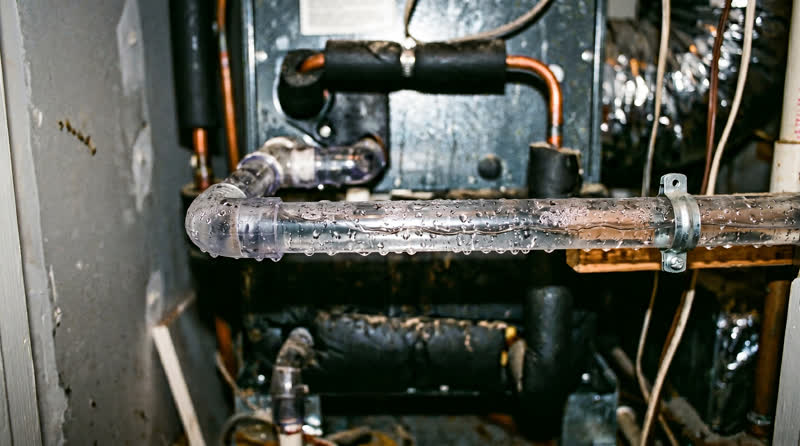
Your air conditioner dehumidifies your home by pulling moisture out of the air at the evaporator coil. That water drips into a drain pan and exits through a PVC drain line. In Lakeland's warm, damp conditions, the inside of that pipe becomes a perfect environment for biofilm growth.
- Algae and biofilm build up faster in Florida than in cooler climates.
- Negative pressure on some systems pulls debris into the drain connection.
- Improper slope or sagging pipe holds standing water that feeds growth.
- Attic heat accelerates slime formation in drain pans and trap sections.
- Seasonal pollen and dust add nutrients that thicken the blockage.
Homes around Crystal Lake, Cleveland Heights, Combee Settlement, Kathleen, Medulla, and Highland City often have older drain routing or tight utility closets that make routine cleaning easy to postpone — until a clog becomes a leak.
Symptoms of a Clogged AC Drain Line
Not every drain issue looks like a puddle. Watch for these signals:
- Water pooling near the air handler or secondary drain pan
- Musty odor at supply vents when the system starts
- System shutting off randomly (float switch trip)
- Higher indoor humidity even when the thermostat reads a cool temperature
- Ceiling stains near the air handler location (common in two-story homes)
What to Do Right Now (Safe Homeowner Checklist)
Before you start taking things apart, keep safety and damage prevention first.
- Turn the system OFF. If your thermostat has an OFF setting, use it. If the unit keeps running, turn off the breaker.
- Check the air filter. A severely clogged filter can contribute to icing, which creates excess water during thawing.
- Look for the float switch. Many Lakeland systems have an inline safety switch on the drain line. If it is tripped, the system may be protecting your home from overflow.
- Dry the area. Use towels or a wet/dry vacuum to prevent water from spreading into flooring.
- Call a professional if water persists. A tech can clear the clog and verify the pan, trap, and line are set up correctly.
If you need help today, call (863) 875-5500 and ask about drain line service for your Lakeland home.
How a Pro Clears a Drain Line (What You Are Paying For)
In many Lakeland homes, the indoor unit sits in a hallway closet or garage utility space. That makes early water signs harder to spot. A technician will usually remove access panels, confirm the coil is draining evenly, and check whether the primary pan is level. If a unit is slightly out of level, water can pool on one end of the pan and overflow even when the drain is partially open.
Another common step is verifying the P-trap. Some systems need a trap to prevent negative pressure from holding water in the pan, while others are configured differently depending on how the air handler is installed. When the drain is not set up correctly for the system's airflow, you can get recurring backups that look like random leaks.
Finally, a good drain service includes testing after clearing. The tech should pour water into the pan and verify steady flow at the termination point outside. If flow is weak, there may be a partial restriction farther down the line or an improper slope through the attic.
A thorough clearing is more than blasting air into a pipe. A technician should confirm the system is draining properly and that the safety components work.
- Inspect drain pan condition and check for cracks or rust
- Verify the evaporator coil is not iced (and why, if it is)
- Clear the line using vacuum pressure or pressurized nitrogen as appropriate
- Flush and treat the line to reduce biofilm regrowth
- Test the float switch and confirm the system cycles normally
- Check for proper drain slope and correct trap design
| Drain Line Service Item | Typical Lakeland Range | Notes |
|---|---|---|
| Basic drain line clearing | $125–$250 | Varies by access and severity |
| Float switch replacement | $175–$350 | Common if switch fails or is corroded |
| Drain pan replacement | $250–$600+ | Depends on air handler configuration |
| Drain line re-route or slope correction | $250–$900+ | Needed when pipe holds water or back-pitches |
Pricing depends on the system location (attic vs. closet), how far water traveled, and whether the tech needs to correct a long-term installation issue. For an estimate, call (863) 875-5500.
Drain Line Clog vs. Other Water-Leak Causes
In Polk County, homeowners often assume all HVAC water comes from a clogged drain. Sometimes it does — but not always. Here is a quick comparison.
| What You See | Likely Cause | Why It Matters |
|---|---|---|
| Water near air handler, system off | Drain clog + float switch | Safety shutoff is doing its job |
| Ice on copper line, then lots of water later | Low airflow or low refrigerant | Fix the cause or it will repeat |
| Water only when it is very humid outside | Drain line partially restricted | Flow cannot keep up with moisture load |
| Drips from supply vent far from unit | Condensation on duct/boot | Insulation or airflow issue, not just drain |
Preventing Drain Line Problems in Lakeland Homes
For homeowners near Lake Hollingsworth, Lake Morton, or Crystal Lake, indoor humidity can stay elevated even when temperatures feel mild. Higher humidity means more condensate volume, which makes any small restriction become a big problem. If you notice your thermostat hitting temperature but the home still feels sticky, ask your technician about airflow settings and whether the system is sized appropriately for humidity removal.
Also pay attention to return air leaks. When a return pulls hot, humid attic air into the system, the coil has to remove that extra moisture. That increases condensate production and can accelerate drain line buildup. Sealing accessible return leaks and keeping filters properly fitted can reduce stress on the drain system.
Because Lakeland systems run most of the year, prevention should be routine, not a once-a-summer project.
- Change filters on schedule. Cleaner airflow reduces coil grime and helps humidity control.
- Use approved drain treatments. Tablets or liquid treatments can slow biofilm growth (avoid anything that damages PVC).
- Schedule maintenance. A tune-up is the best time to flush the drain and confirm slope and float switch operation.
- Address humidity. If your home feels clammy in Lakeside Village or South Lakeland, ask about airflow and system sizing — short runtimes can leave moisture behind.
Drain Line Repair Cost in Lakeland, FL (2026)
Homeowners always want to know: what is a clogged drain line actually going to cost? Pricing varies by access, severity, and whether any water damage has already happened, but the table below reflects typical 2026 Lakeland-area pricing for drain-related service calls.
| Service | Typical Price Range | What's Included |
|---|---|---|
| Service call / diagnostic | $99 | Arrival, full inspection, and written recommendation. Not waived. |
| Standard drain line clear | $150–$275 | Wet/dry vac at the outdoor termination, line flush, treatment tablets, float-switch test. |
| Nitrogen blow-out / pressurized clear | $225–$375 | Used when a vacuum alone will not break loose heavy biofilm or sludge. |
| Float switch replacement | $165–$290 | Replace failed SS1/SS2 float switch and verify shutdown logic. |
| Drain pan repair or replacement | $385–$950+ | Primary or secondary pan depending on air handler model and access. |
| Condensate pump replacement | $320–$525 | New pump, tubing, check valve, and wiring where the line cannot drain by gravity. |
| P-trap rebuild / reroute | $275–$650 | Correcting improper slope, missing trap, or poorly supported runs. |
Prices assume standard residential access. Attic air handlers in Grasslands or Highland City homes with pull-down stairs are still straightforward; units buried behind built-ins or in tight mechanical closets can push labor higher. We give a written price before any work starts — no surprises.
How Our Yeti Club Helps With Drain Line Maintenance
Our Yeti Club membership is $199 per system per year. For Lakeland homeowners, the drain-line benefit alone often covers the cost.
- One annual tune-up per system that includes a full drain line flush, float switch test, pan inspection, and treatment.
- 10% off any repair, which applies to drain clearing, pump replacement, or float switch work if something fails between visits.
- Priority scheduling during peak Lakeland humidity when drain clogs are most likely.
- $99 service call fee remains in effect (we do not waive it, even for members) but the 10% repair discount offsets it on most jobs.
Maintenance cleanings can happen once a year or twice as needed for homes with heavy biofilm history. If you are in an older Medulla or Combee Settlement home with long drain runs and a documented clog pattern, twice-as-needed scheduling prevents the emergency calls entirely.
Why Lakeland's Climate Makes This a Repeat Problem
Lakeland sits in a humid subtropical zone with summers that routinely hit 90°F+ dew points and winters mild enough that AC systems still run. That extended runtime means coils are pulling moisture out of the air almost every day of the year — often 5,000 or more operating hours annually compared with 1,500–2,000 in northern climates. Every one of those hours produces condensate that has to go somewhere.
The Dixieland, Lake Morton, and Lake Hollingsworth areas in particular see elevated outdoor humidity from surrounding water features, which raises the load on the evaporator coil. More moisture removed means more condensate in the pan, which means more opportunity for biofilm, algae, and sediment to collect in the drain line. This is why a maintenance schedule that works in Atlanta or Nashville will not keep up in Lakeland.
On top of the humidity, Lakeland's sandy soil and frequent summer storms push dust and fine particulate into attic spaces. That material rides the return air into the coil, combines with condensate, and becomes the glue that drain clogs are made of. Kathleen, Cleveland Heights, and Combee Settlement homes with older attic air handlers see this cycle most often.
Water Damage Risks When a Drain Line Is Ignored
A clog by itself is inexpensive. The damage that a clog can cause is not. Lakeland homes we visit weekly have lost ceilings, drywall, flooring, and even cabinetry from overflows that started as a $175 service call. The South Lakeland and Lakeside Village homes with air handlers in second-floor closets or above finished garages carry the most risk because gravity works against you when overflow happens.
Here is what typically fails first when the drain backs up:
- Ceiling drywall directly under the air handler. A 4x6 foot water-damaged section runs $900–$2,200 to repair, paint, and texture-match.
- Flooring below a closet unit. Laminate swells within hours. Hardwood cups and may need replacement across the entire run.
- Drywall and trim in adjacent rooms when overflow travels along floor plates.
- Mold remediation if the issue sat for more than a day or two — often $1,500–$5,000+ depending on scope and testing.
This is the reason a working float switch is non-negotiable for any attic or closet air handler. It costs a fraction of a single drywall repair and shuts the system down the moment the pan rises. If your home does not have one installed, ask about it on your next maintenance visit — our techs can add one during a routine appointment.
Why DIY Drain Cleaning Often Makes It Worse
We get several calls each month from Lakeland homeowners who tried a shop vacuum on the drain termination, pushed sludge further up the line, and ended up with a worse backup than they started with. A few things to know before you attempt this yourself:
- Vacuuming at the outdoor termination only works if the clog is near the end. If the blockage is at the coil or trap, a vacuum can compact it.
- Compressed air or shop blowers can separate glued PVC joints inside walls, creating a hidden leak that goes undetected until the ceiling stains.
- Bleach poured down the line can damage aluminum coils and drain pans if it sits. It can also create fumes inside closet installations.
- Missing a float-switch problem is common with DIY: the system keeps shutting off, the homeowner assumes it is a clog, but the actual issue is a stuck switch or failed pan sensor.
A proper diagnosis takes under 15 minutes for a trained technician and prevents the $1,500 ceiling repair that follows a bad DIY attempt. Call (863) 875-5500 before you experiment with your own system.
When to Call for AC Repair in Lakeland, FL
If water is actively leaking, if the system repeatedly shuts off, or if you suspect icing or refrigerant issues, it is time to bring in a licensed professional. Top Notch Air Conditioning & Heating serves homeowners across Lakeland, including Cleveland Heights, Lake Hollingsworth, Crystal Lake, and Kathleen. Call (863) 875-5500 to schedule service.
For related help, see our AC repair page or browse local service options at Lakeland, FL.
FAQ: AC Drain Line Clogs in Lakeland
Can I pour bleach down my AC drain line?
Some homeowners do, but the safer approach is using an HVAC-approved drain treatment and having a tech confirm your drain materials and configuration. Incorrect chemicals can damage components or create fumes in tight closets.
Why does my AC keep shutting off even though the house is hot?
A clogged drain line can trip a float switch, shutting the system off to prevent overflow. If it keeps happening, the clog may be partial or the slope may be incorrect.
How often should I have my drain line cleaned in Florida?
For most Lakeland homes, at least once per year is a good baseline, and twice as needed is common when systems run hard through long humid seasons.
Is water around the air handler always a drain clog?
No. Icing, duct condensation, and pan issues can also create water. A proper diagnosis matters so the problem does not return.
Do you service neighborhoods like Dixieland and Lake Morton?
Yes. Top Notch Air Conditioning & Heating serves all of Lakeland and much of Polk County from our base in Winter Haven.